
Hotel Sanders: human-centred hospitality in practice
This independent observational case study is based on my stay at Hotel Sanders in Copenhagen in 2018. It was neither commissioned by nor produced in collaboration with the hotel.
Luxury hospitality is often presented through visible assets: architecture, materials, objects and exclusivity. These elements shape expectation, but they cannot create a meaningful experience by themselves. A beautifully designed hotel may still feel cold. A premium environment can become strangely transactional when generosity ends at the minibar. Carefully written promises of personal service lose credibility when employees lack the attention, permission or operational support required to deliver them. The more consequential question is therefore not what a luxury brand says or displays, but what happens between people: Does the organisation’s behaviour make its promise believable?
During my stay at Hotel Sanders, the answer was expressed through a sequence of small but remarkably consistent interactions. No single gesture defined the experience. Their alignment did.
The promise: low-key, residential luxury
Hotel Sanders was established by former Royal Danish Ballet dancer Alexander Kølpin as a more personal alternative to conventional luxury hospitality. His publicly described intention was to create an experience that felt high-end but low-key—closer to a private residence than an imposing institution.
That intention extended beyond interior decoration. Lind + Almond’s work for the hotel encompassed interior architecture, bespoke furniture, branding, art direction and even staff uniforms. The result was not simply a coordinated visual identity, but an environment designed as a complete experience.
The interiors brought together Scandinavian modernism, English eccentricity and references to different periods of travel. Yet the space did not feel like a showroom. Its refinement was softened by intimate proportions, layered materials, residential furniture and rooms that invited people to settle rather than merely admire.
As designer Pernille Lind explained:
“We wanted the customer to feel extremely relaxed, but also to see details that reference many different eras.”
The significant word is not details. It is feel.
The brand’s promise depended upon those details producing a particular human state: ease, familiarity and the sense of being personally received.
1. Booking: the experience begins before arrival
The booking process was intuitive and uncomplicated. More importantly, the communication that followed did not feel like a standard administrative confirmation.
I received a warm, personalised welcome from the guest-relations manager. Before entering the building, I had already encountered the tone the hotel appeared to promise: attentive, composed and personal.
This first interaction mattered because it shaped the emotional context for everything that followed. The booking interface completed a transaction; the human communication began a relationship.
Brand-experience principle - The customer journey does not begin when a guest crosses the threshold. Pre-arrival communication should establish the same emotional character that the physical environment intends to deliver.
2. Arrival: replacing institutional procedure with welcome
I arrived considerably earlier than the standard check-in time. Such moments reveal a great deal about a hospitality brand because they fall outside the ideal operational script.
The reception team handled the situation without visible irritation or rigidity. The response felt calm and accommodating rather than procedural. I was not made to feel that my arrival represented a disruption that needed to be managed.
The spatial environment reinforced that response. Entering Sanders felt less like approaching a formal reception system and more like arriving at the home of a well-travelled host. Staff presentation, tone of voice and interior atmosphere supported the same impression.
This is where brand design and human conduct either strengthen or contradict one another. A residential interior cannot create a feeling of welcome if the interpersonal response remains institutional. At Sanders, the two appeared aligned.
Brand-experience principle - Design can establish the conditions for an experience, but employee behaviour completes it. A promise of warmth must be visible in how exceptions, inconvenience and unscripted moments are handled.
3. The room: generosity removes transactional friction
My room expressed what might be called cosy luxury: chestnut furniture, textured surfaces, selected artwork and details that felt collected rather than generically specified.
The room’s effect came not only from its aesthetic composition but also from the decisions surrounding its use. The minibar contained high-quality drinks offered without additional charge and was replenished daily. Beside it stood a basket of health-conscious, gluten-free snacks, which was also regularly restocked.
I no longer remember whether I had communicated my dietary requirements before arrival, so I cannot know whether the selection was personalised or part of the hotel’s standard offering. Either way, its presence supported the larger experience: abundance was offered without repeatedly returning the guest’s attention to price.
The financial value of these items was not the point. Their availability communicated something more important: while occupying the room, I was invited to feel at home rather than remain constantly conscious of the commercial transaction.
Many premium brands undermine their own positioning through small charges that feel disproportionate or inhospitable. The immediate revenue may be minor, while the emotional contradiction is considerable.
Brand-experience principle — Every charge communicates something. Premium brands should identify moments where extracting additional value from the customer damages the larger experience they are trying to create.
4. Room service: carrying the atmosphere into human interaction
In many luxury hotels, the staff responsible for caring for the room remain almost invisible. This may protect the guest’s privacy, but it can also reveal an unspoken hierarchy: some employees are presented as representatives of the brand, while others appear expected to complete their work without becoming part of the human experience.
At Sanders, the distinction felt less pronounced.
During the evening, a member of the service team knocked on my door. She was beautifully attired and greeted me with a warm smile. She carried a jug of water infused with fresh mint, entered and placed it beside my bed.
I still remember the encounter because she did not appear as someone moving silently behind the hotel’s visible identity. Her presentation and manner communicated that she belonged fully to it. The gesture connected care for the room with care for the person occupying it.
The water, attire and smile were individually modest details. Together, they demonstrated something more substantial: the hotel’s atmosphere did not depend exclusively upon its interiors or its most visible front-of-house employees. It continued through a member of staff whose work might ordinarily remain unnoticed.
Guests do not experience design, operations and staff hierarchy as separate disciplines. They encounter one environment, and every person within it contributes to whether its promise feels credible.
Brand-experience principle — A human-centred hospitality brand enables every employee who encounters the guest to embody its values with confidence and dignity. Hospitality should not be performed only at reception; it should remain present wherever care is delivered.
5. Sanders Kitchen: personalisation requires permission
The open kitchen introduced visibility and craftsmanship into the breakfast experience. Guests could observe dishes being prepared rather than experience the restaurant as an anonymous production system.
The more significant moment occurred during dinner.
I follow a gluten-free and sugar-free diet and am accustomed to limited options when eating away from home. At Sanders, the chef approached my table and offered to prepare a dish adapted to my dietary requirements.
This was more than accommodating a restriction. The chef’s direct involvement removed the discomfort of becoming a difficult exception. Instead of making the limitation more visible, the response restored ease and choice.
For this kind of personalisation to occur credibly, employees need more than a service script. They require sufficient authority to notice a need, make a decision and act upon it.
Brand-experience principle — Personal service depends upon frontline discretion. A brand cannot promise individual attention while designing systems that prevent employees from responding individually.
5. The living room: memory turns service into recognition
After dinner, I moved into the public living-room area and sat near the fireplace. A member of staff remembered that I had not ordered dessert and offered to prepare a fresh fruit bowl.
The gesture was small. Its effect was not.
The staff member had retained information from an earlier interaction, recognised its possible relevance in a different setting and acted without being asked. The experience therefore continued across spaces rather than resetting at the boundary of each department.
This is where personalisation becomes recognition. The guest no longer feels processed through separate hotel functions—restaurant, room, reception—but perceived as one person moving through a connected environment.
It is tempting to describe such moments as intuition. Operationally, however, intuition alone is not a reliable strategy. Consistent recognition requires attention, communication and a culture in which employees consider such gestures part of their role.
Brand-experience principle — The most meaningful personalisation often depends upon memory. Organisations should consider how relevant knowledge can travel with the customer without making the experience feel monitored or mechanical.
6. The waiting moment: anticipating an unspoken need
One of the most memorable interactions occurred not during a formal service, but while I was waiting in the reception area for a taxi that would take me to an event.
A member of the reception team approached me and asked whether they should prepare a coffee for me to take away. They also invited me to take a bottle of water and pointed out that umbrellas were available because it looked as though it might rain.
I had requested none of these things. In fact, I had not yet consciously considered wanting them. But had I waited another few minutes, coffee, water and protection from the weather would likely have become precisely what I needed.
This was not a performance of extraordinary intuition. It was situational awareness translated into timely action. The staff member noticed that I was waiting, understood where I was going and considered what might make the next stage of my journey more comfortable.
Many customer experiences are designed around explicit requests. Yet some of the most meaningful care occurs before a request has been formulated—when an employee is attentive enough to recognise the probable need and empowered to respond without being prompted.
The interaction also demonstrates that waiting is not empty operational time. It remains part of the experience. A guest waiting for transport is still encountering the brand, even though no formal transaction is taking place.
Brand-experience principle — Anticipatory service does not require employees to read minds. It requires them to notice context, imagine the customer’s immediate next step and act while the gesture is still useful.
What luxury brands can learn
A brand promise becomes meaningful only when it is translated into decisions and behaviour. For organisations seeking to create a more credible human experience, the Sanders example suggests five practical questions.
1. What should the customer feel? Words such as luxury, personal and welcoming remain too broad unless the organisation defines the emotional experience it intends to create.
2. Which behaviours would make that feeling credible? Values must be translated into observable conduct. What does warmth sound like during a difficult request? What does personal attention require at check-in, during service or at departure?
3. Where does the operation contradict the promise? Unexpected charges, rigid procedures, departmental silos and insufficient employee authority may quietly undermine an otherwise compelling identity.
4. Where should employees be trusted to decide? Human-centred service cannot be delivered entirely through scripts. Employees need principles, information and appropriate discretion.
5. Does the experience remain coherent from beginning to end? The customer does not experience departments, brand guidelines and organisational charts. They experience one continuous relationship. Every touchpoint contributes to—or weakens—the same impression.
Luxury as human coherence
The lasting impression of Hotel Sanders was not created by one extraordinary gesture. The hotel’s promise therefore existed not only in its language or aesthetics, but in the relationships unfolding within them. That may be the most credible form of contemporary luxury: not constant spectacle, but the feeling that an environment has been designed around human presence—and that the people operating it understand the same intention.


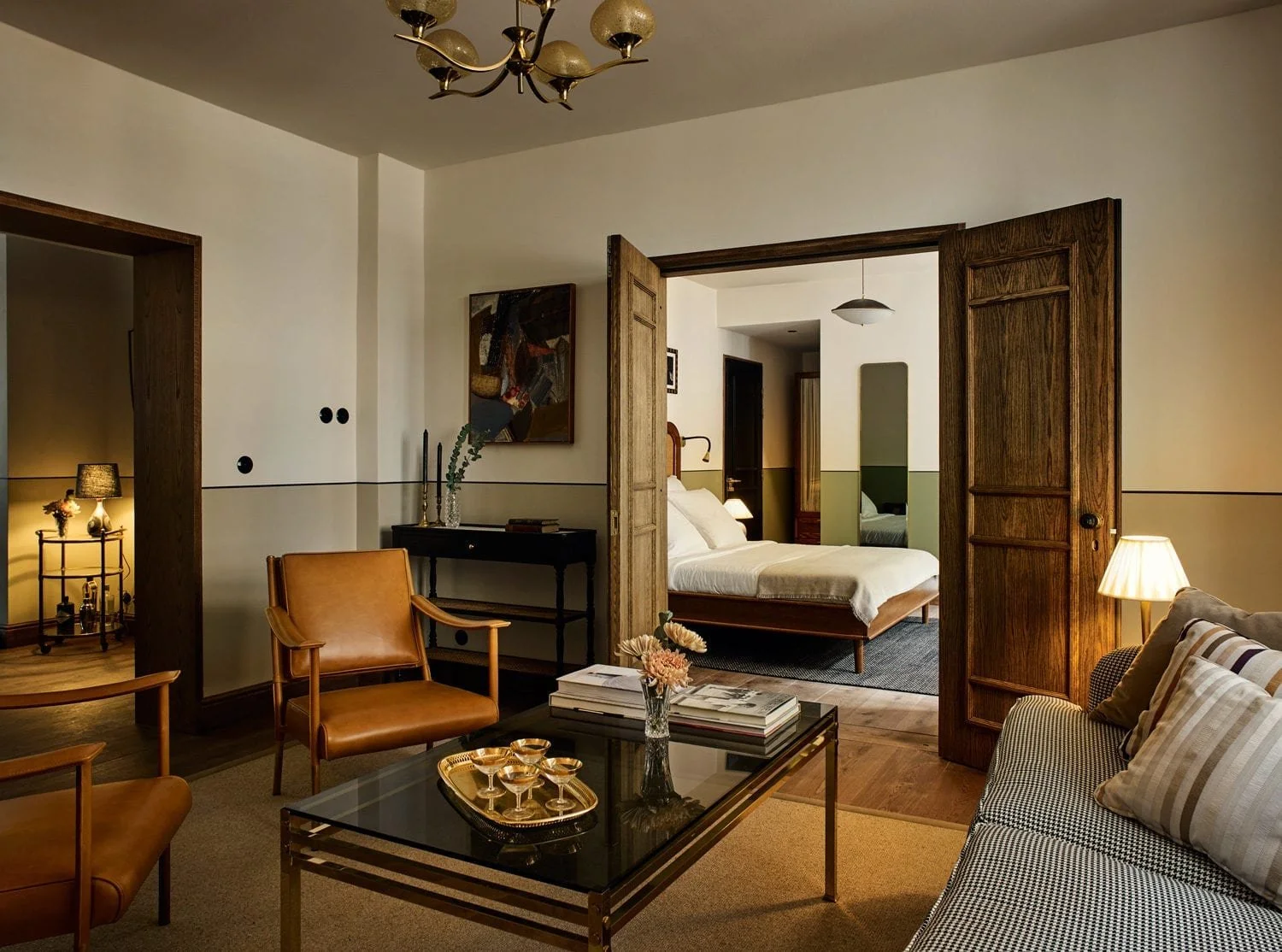


Image courtesty Hotel Sanders